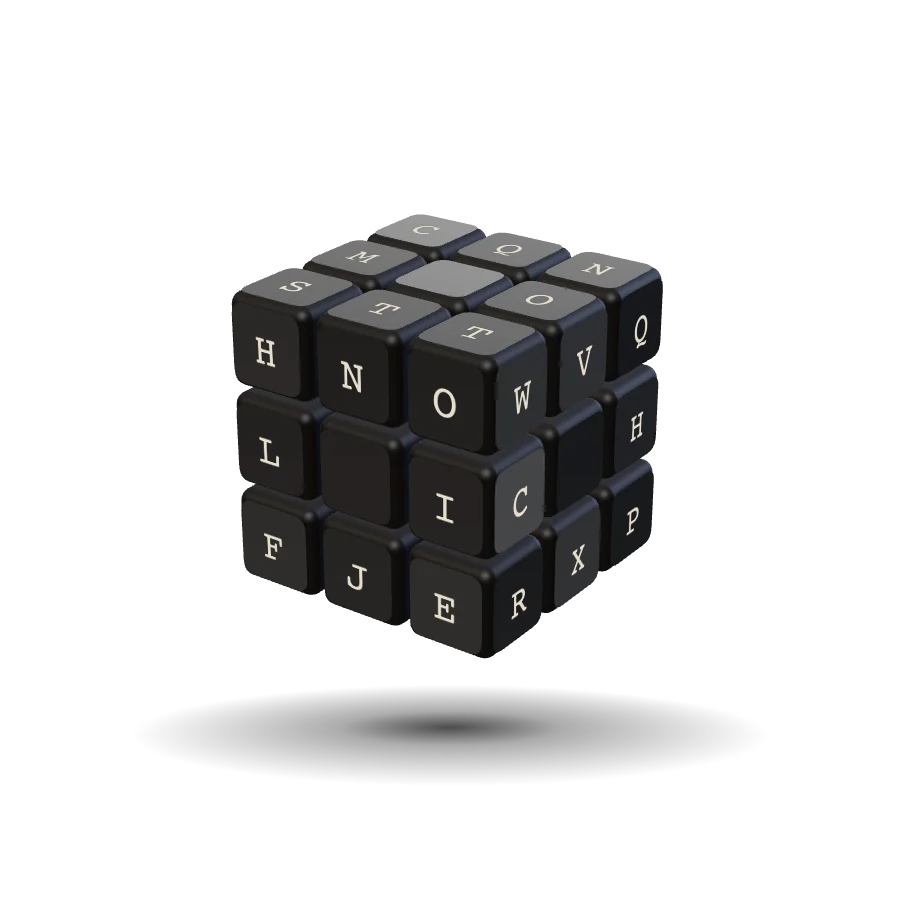
Arrow keys: rotate the puzzle. U, R, F, D, L and B keys: turn a face of the 3×3, hold Shift for the prime move.

Cubemuch

Opening soon

Français

cubemuch.com

Cubemuch

Twenty moves are enough to solve any 3×3. You still have to find them.

A web app to solve, study and practice, from 2×2 to 7×7 and all the way to blindfolded, in your browser.

Opening soon. The app is already running, in private access; its public opening is being prepared.

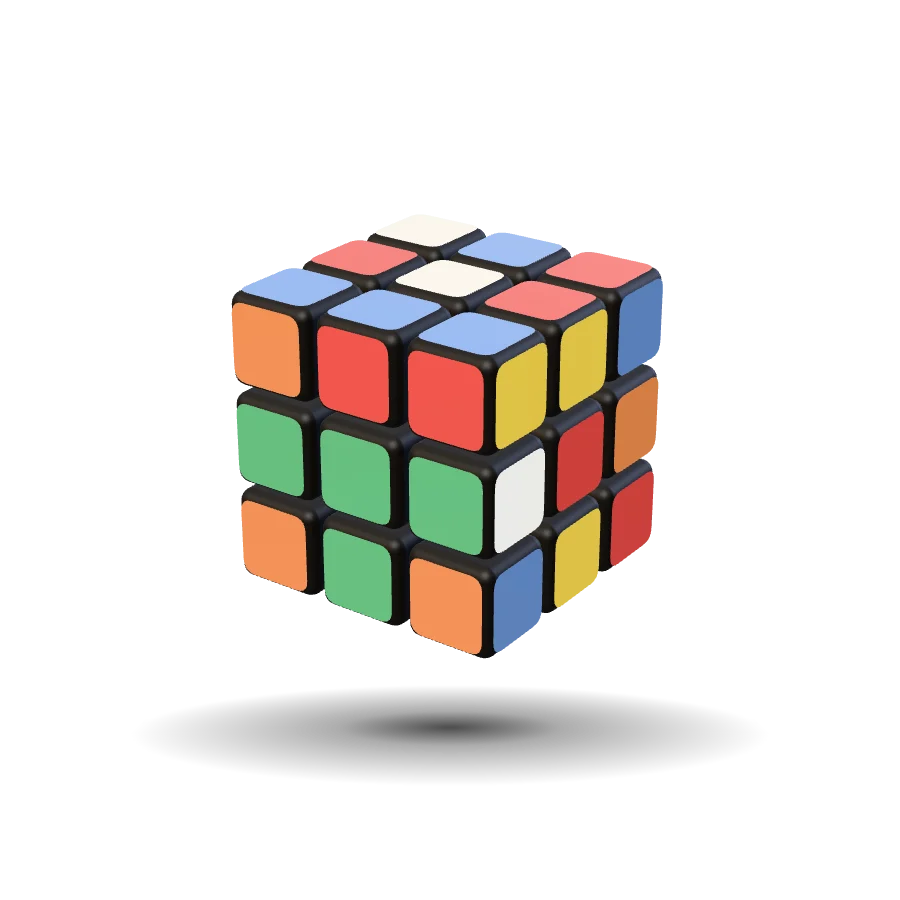
The 3×3 after the 21-move scramble, with the U, F and R faces showing.
Random-state scramble 21 / 21 moves
  1. U'
  2. F2
  3. U'
  4. L2
  5. D
  6. R2
  7. F2
  8. L2
  9. D2
  10. R2
  11. F'
  12. L'
  13. D
  14. F2
  15. U2
  16. L'
  17. B
  18. F
  19. D'
  20. B'
  21. U2

01 At random, for real

One state drawn from 43,252,003,274,489,856,000

A random-state scramble does not just turn faces haphazardly. The app draws a state uniformly among all the states of the cube, then searches for a verified scramble of 21 moves or fewer that leads to it.

The one at the top of the page has 21 moves. It was found in 297 ms on the development Mac.

The drawn state, face by face
U
UBRRURBBB
R
DDBURLBDR
F
LRRFFFLFL
D
URUFDLDUF
L
RUDDLLFDF
B
UUFBBBDLL

“Verified scramble: 21 moves from the solved state, the inverse of a two-phase solution.”

Message from the app's scramble generator

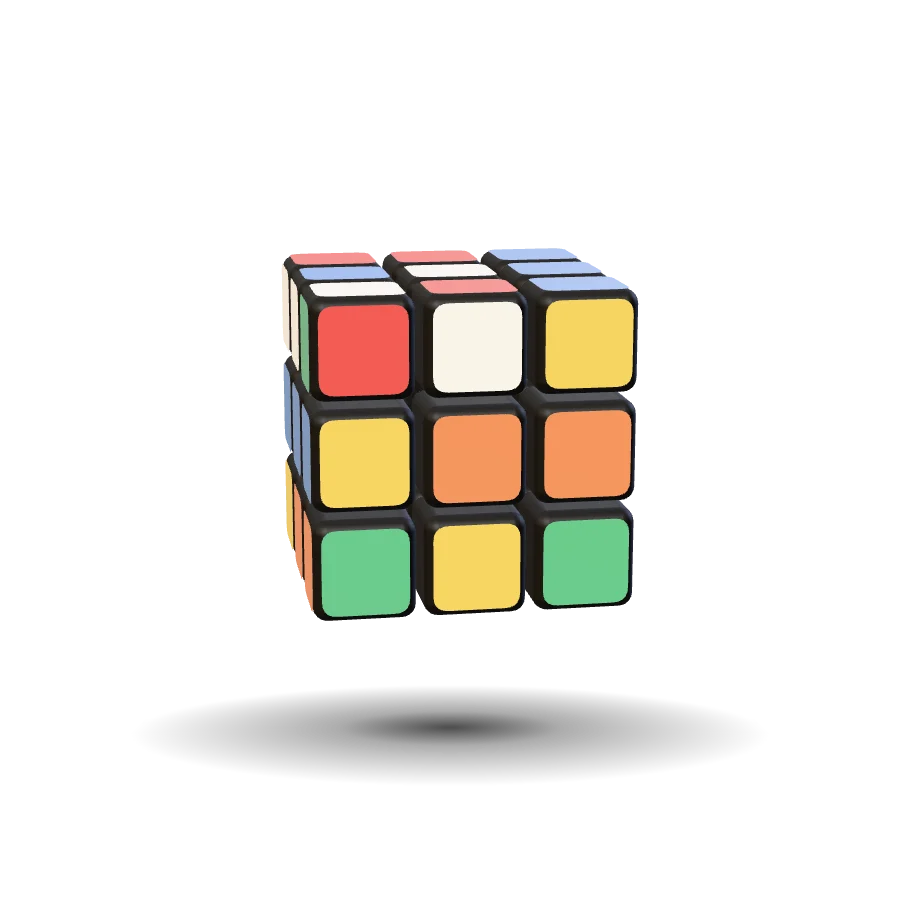
The 3×3 in the drawn state, seen from another angle.

02 Two-Phase

20 moves, then it stops.

Every 3×3 can be solved in 20 moves or fewer, in HTM. The app's own two-phase engine, “Kociemba-type”, publishes its improvements while it searches; like Cube Explorer, it stops by default as soon as it holds a solution of 20 moves or fewer. The threshold can be set from 16 to 23; stopped early, it keeps the best one.

Improvements published during the search
  1. 24 movesat 8 ms
  2. 23 movesat 18 ms
  3. 22 movesat 20 ms
  4. 21 movesat 25 ms
  5. 20 movesat 1.6 s

“Target of 20 moves reached: 20-move solution verified.”

88,125,723 nodes in 1.6 s, on the development Mac

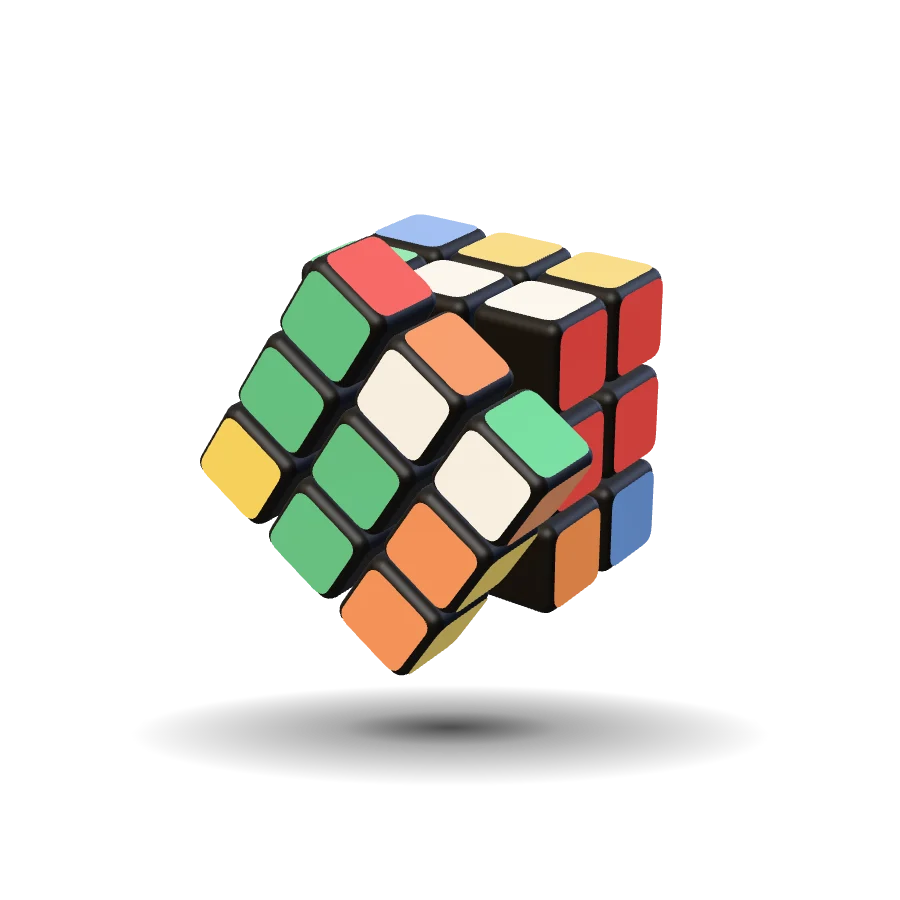
The 3×3 halfway through the Two-Phase solution, a layer mid-turn.
Two-Phase solution: one scroll notch, one move 0 / 20 moves
  1. R'
  2. U
  3. B'
  4. R
  5. L
  6. U'
  7. B
  8. R2
  9. B2
  10. L2
  11. F
  12. U2
  13. R
  14. F2
  15. U
  16. L2
  17. U
  18. L2
  19. B2
  20. L2

03 Huge

18 moves, and not one fewer.

Same state, different engine. “Solve optimally with Huge” hands the cube to a native engine of the app that takes up Cube Explorer's Huge Optimal Solver, with the same table of 705,886,618 bytes. It runs in the background on the server and proves the minimal length in HTM; the solution is shown only after it has been replayed on the starting cube.

Two moves fewer than Two-Phase, for nearly 13 times the computing time. No time guarantee: across the 16 states of this page, the proof took from 2.2 s to 134.5 s on the development Mac.

The proof, depth by depth
  1. 11 moves33 nodesno solution
  2. 12 moves345 nodesno solution
  3. 13 moves5,568 nodesno solution
  4. 14 moves79,143 nodesno solution
  5. 15 moves1,143,510 nodesno solution
  6. 16 moves16,366,302 nodesno solution
  7. 17 moves231,332,973 nodesno solution
  8. 18 moves157,191,385 nodessolution found

“Minimal length proven: 18 moves (HTM). No solution of 17 moves or fewer.”

406,119,259 nodes in 19.7 s, on the development Mac

The 3×3 solved by the Huge solution.
Huge solution, optimal 0 / 18 moves
  1. U
  2. D2
  3. R'
  4. D'
  5. B'
  6. L2
  7. F'
  8. U2
  9. F2
  10. D2
  11. R'
  12. L2
  13. F'
  14. U
  15. L
  16. U2
  17. F
  18. U

Two-Phase 20 moves in 1.6 s Huge 18 moves in 19.7 s

04 Nine puzzles

From 2×2 to 7×7, and three other shapes.

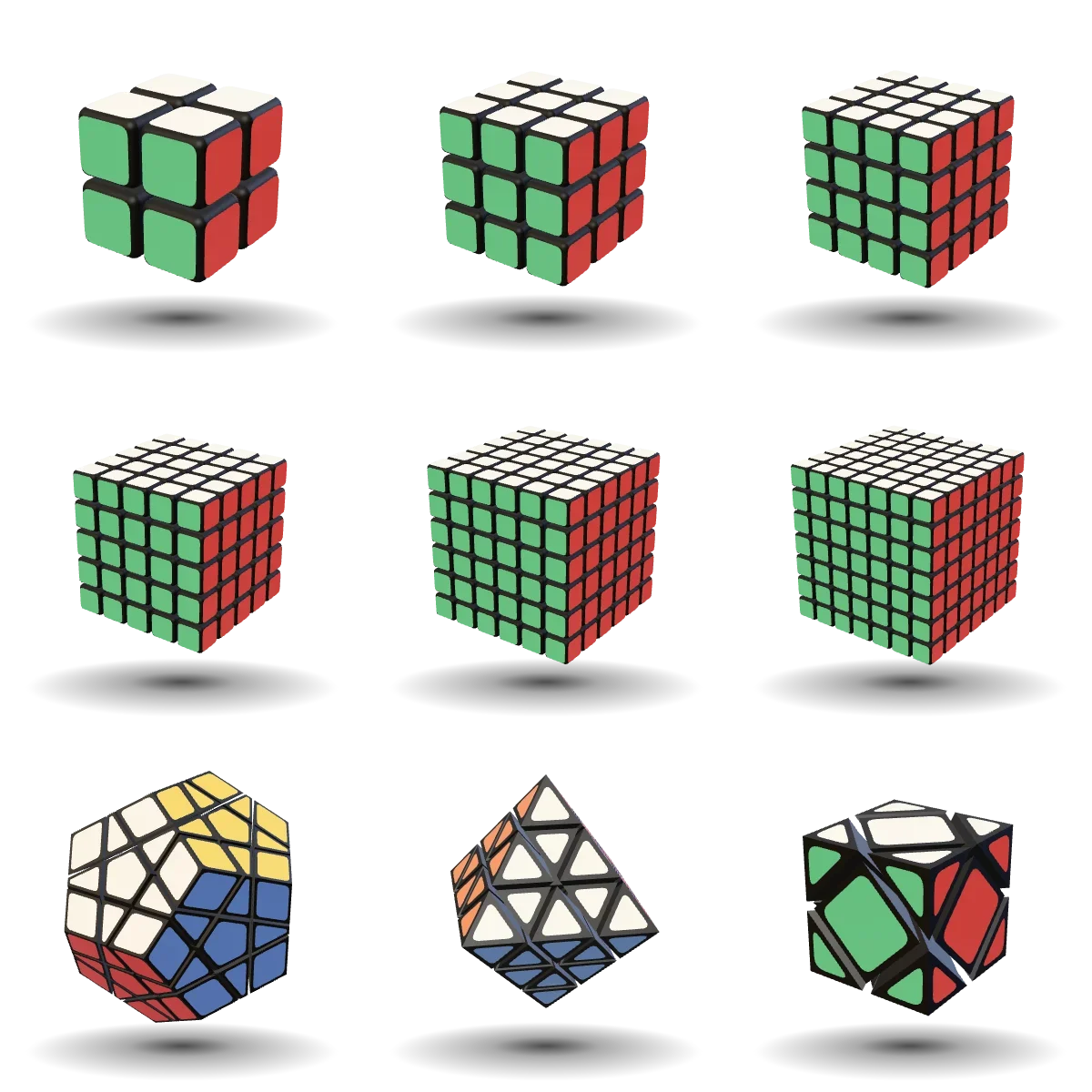
2×2, 3×3, 4×4, 5×5, 6×6, 7×7, Megaminx, FTO and Skewb: manipulation, state setup, solving, animation and replay. Each puzzle has its own engine, and every solution is replayed and verified before it is shown.

The nine puzzles solved, side by side: 2×2, 3×3, 4×4, 5×5, 6×6, 7×7, Megaminx, FTO and Skewb.

2×20 / 8 moves

Corners by an in-house exhaustive table. Proven minimum.

A training scramble of 11 moves drawn by the app, then the solution, replayed until the puzzle is solved.

“2×2 solution verified by applying it, minimal distance in the cube's free frame.”

3×30 / 20 moves

Two-Phase. Found in 5 ms on the development Mac.

A random-state scramble of 21 moves drawn by the app, then the solution, replayed until the puzzle is solved.

“Target of 20 moves reached: 20-move solution verified.”

4×40 / 255 moves

In-house constructive reduction. The length is not minimal. The 4×4 can also go through TNoodle.

A training scramble of 40 moves drawn by the app, then the solution, replayed until the puzzle is solved.

“Constructive reduction verified: 19 wing and center steps, then a 3×3 solve. The length is not guaranteed to be minimal.”

5×50 / 276 moves

In-house constructive reduction. The length is not minimal.

A training scramble of 60 moves drawn by the app, then the solution, replayed until the puzzle is solved.

“Constructive reduction verified: 16 wing and center steps, then a 3×3 solve. The length is not guaranteed to be minimal.”

6×60 / 549 moves

In-house constructive reduction. The length is not minimal.

A training scramble of 80 moves drawn by the app, then the solution, replayed until the puzzle is solved.

“Constructive reduction verified: 35 wing and center steps, then a 3×3 solve. The length is not guaranteed to be minimal.”

7×70 / 721 moves

In-house constructive reduction. The length is not minimal.

A training scramble of 100 moves drawn by the app, then the solution, replayed until the puzzle is solved.

“Constructive reduction verified: 47 wing and center steps, then a 3×3 solve. The length is not guaranteed to be minimal.”

Megaminx0 / 464 moves

In-house construction. The length is not optimal.

A training scramble of 77 moves drawn by the app, then the solution, replayed until the puzzle is solved.

“Megaminx construction verified: corners then edges, permutation and orientation. This construction does not guarantee an optimal solution.”

FTO0 / 30 moves

TNoodle adapter, experimental. No optimality claimed.

A training scramble of 30 moves drawn by the app, then the solution, replayed until the puzzle is solved.

“Experimental TNoodle FTO solution verified on the initial puzzle; no optimality claimed.”

Skewb0 / 9 moves

Exhaustive table. Minimal solution.

A training scramble of 11 moves drawn by the app, then the solution, replayed until the puzzle is solved.

“Skewb solution verified, minimal in the R U L B corner moves and their inverses.”

05 Blindfolded

Eyes closed.

The stickers turn into Speffz letters. The memo reads in pairs; the app's 3-style plan then executes it, commutator by commutator, in 89 moves.

Memo, in pairs

Corners CT VA CD SG I

Edges PC TR SE BQ VG

The scrambled 3×3, darkened, every sticker bearing its Speffz letter.
3-style plan 0 / 10 commutators
  1. CTcorners[U' B': [B U B', D']]

    The buffer holds its own piece. Break into a new cycle, then come back to the buffer with the following targets.

  2. VAcorners[B L B', R2]

    This conjugated commutator cycles three oriented pieces. The other pieces go back to their places once the setup moves are undone.

  3. CDcorners[L U' R D2 R': [R D2 R', U]]

    This conjugated commutator cycles three oriented pieces. The other pieces go back to their places once the setup moves are undone.

  4. SGcorners[D' L U' L': [L U L', D]]

    This conjugated commutator cycles three oriented pieces. The other pieces go back to their places once the setup moves are undone.

  5. Icorners, parity[U' R': R U' R' U' R U R' F' R U R' U' R' F R]

    Last corner of an odd-permutation memo: swap UBR with this target and UB with UR. To memorize the edges, imagine the swaps UB-U ↔ UR-U and UB-B ↔ UR-R, without adding a parity letter. With this plan's letters: imagine A ↔ B and Q ↔ M.

  6. PCedges[R2 B U2 M' U': [U M, U2]]

    This conjugated commutator cycles three oriented pieces. The other pieces go back to their places once the setup moves are undone.

  7. TRedges[M' B M' B': [B M B', B2]]

    This conjugated commutator cycles three oriented pieces. The other pieces go back to their places once the setup moves are undone.

  8. SEedges[U B2 U': [U B2 U', M]]

    This conjugated commutator cycles three oriented pieces. The other pieces go back to their places once the setup moves are undone.

  9. BQedges[B2: [B R B', M]]

    This conjugated commutator cycles three oriented pieces. The other pieces go back to their places once the setup moves are undone.

  10. VGedges[L': [L S L', F]]

    This conjugated commutator cycles three oriented pieces. The other pieces go back to their places once the setup moves are undone.

06 And everything else

Roll the credits.

Solve
Continuous Two-Phase in HTM, QTM, STM or SQTM, three-axis search. Huge and proof of optimality: starred solution, “Next solution” for the others of the same length. Method solving, CFOP and algorithm sets chosen in the Atelier, “Optimal speed” mode. Wildcard search: arbitrary targets, unknown stickers, “Piece fixed, orientation free”, “Orientation fixed, piece free”.
Analyze
The 48 symmetries, the inverse and product of states, the 33 symmetry types and the search for symmetric cubes. State collections, batch computations and statistics. Assisted color entry, maneuvers in Cube Explorer notation, import and export of its files. Printing and standalone HTML export. These features take up those of Cube Explorer 5.15.
Known cases
22 sets on the 3×3, including 8,112 OLS cases, 3,916 1LLL cases and 583,284 LSLL cases, filtered by family, name and similarity. 12,688 cases of the 1LLL, OLLCP, OLS, ZBLS and ELS families with proven optimal, speedable algorithms: 130,243 algorithms verified. 104 sets on the other puzzles, including the 2×2 CBL and its 2,794 cases: 103,935 algorithms replayed.
Blindfolded
3BLD, 4BLD and 5BLD: Old Pochmann, M2 and 3-style plans. 378 corner pairs and 440 edge pairs in the 3-style catalog, 3,091 variants replayed. Speffz or custom letters, one image per pair out of 576. A guided course of nineteen lessons and forty-five exercises, reviewed after 1, 3, 7 then 14 days. No multi-blind.
Practice
Keyboard or touch timer, sessions, +2 and DNF penalties, averages and statistics; measured, entered and smart-cube times kept apart. Goals, badges, consistency and progress per puzzle. Export and import of your data.
Smart cubes
GAN (Gen1 to Gen4), Giiker and GoCube / Rubik's Connected protocols: cube mirroring, reconstruction, live solving. Only a real GAN has been confirmed with a physical cube.
Camera
Reading the six faces of a 3×3 in the browser. No image leaves the page.
Programs
A robot or a script solves a cube with a personal token, including in the format of Cube Explorer's command server.
Competitions
Historical scrambles from WCA competitions, drawn blind: you play, you time yourself, then you find out where it came from. Competitor tracking from the WCA's daily public export, groups and schedules of a competition from its public program. No affiliation with the WCA.
Clubs
Multiple groups, roles, invitations, challenges and rankings.
Account
Two-factor authentication required.
07 Soon

Opening soon.

The app is already running, in private access. Its public opening is being prepared. No date announced; the cube, at least, is solved.